Every year about 48 million people in the United States and roughly 4 million in Canada experience foodborne illness, which highlights how important safe meat handling is. Raw meat can carry pathogens such as Salmonella, E. coli, Campylobacter, and Listeria; small mistakes while shopping, storing, preparing, or cooking allow harmful bacteria to spread and increase risk.
This practical guide gives home cooks and food businesses clear Safe Meat Handling Tips from smart procurement and delivery checks to avoiding the refrigerator “danger zone,” safe thawing methods, cross‑contamination prevention, and using correct cooking temperatures. Make sure to download the printable temperature chart for a quick reference at the stove.
Keep reading for concise, actionable steps you can follow every time you buy, store, prepare, and cook meat so your family can eat with greater confidence and safety.
Understanding Foodborne Illness and Its Symptoms
Foodborne illness happens when contaminated food or drink introduces harmful bacteria, viruses, or toxins into your body. Common pathogens are carried by raw meat and poultry — for example, Salmonella and Campylobacter are frequently linked to poultry, certain strains of E. coli are associated with beef and ground meats, and Listeria can appear in ready-to-eat meats and some fish products. Knowing typical symptoms and who’s most vulnerable helps you respond quickly.
Common Symptoms to Recognize
Symptoms depend on the pathogen and the person, but look for:
- Stomach cramps
- Diarrhea
- Nausea
- Vomiting
- Fever
- Chills
- Headache
- Muscle aches
Onset varies: some foodborne toxins (for example, Staphylococcus aureus) can cause symptoms within a few hours, while infections like Listeria may take days to weeks to appear. Seek medical care if symptoms are severe, persistent, or accompanied by signs of dehydration (very little urine, dizziness) — especially for young children, older adults, pregnant people, or those with weakened immune systems.
Who Is Most at Risk
Groups that can become seriously ill faster include pregnant women (Listeria risks the fetus), young children, older adults, and people with weakened immune systems. In short: if someone is in a higher-risk group, make sure to follow strict food-safety steps proper storage, careful handling, correct cooking temperatures, and frequent handwashing every time you prepare meat, fish, or other perishable foods.
The Importance of Safe Meat Handling Tips for Food Safety
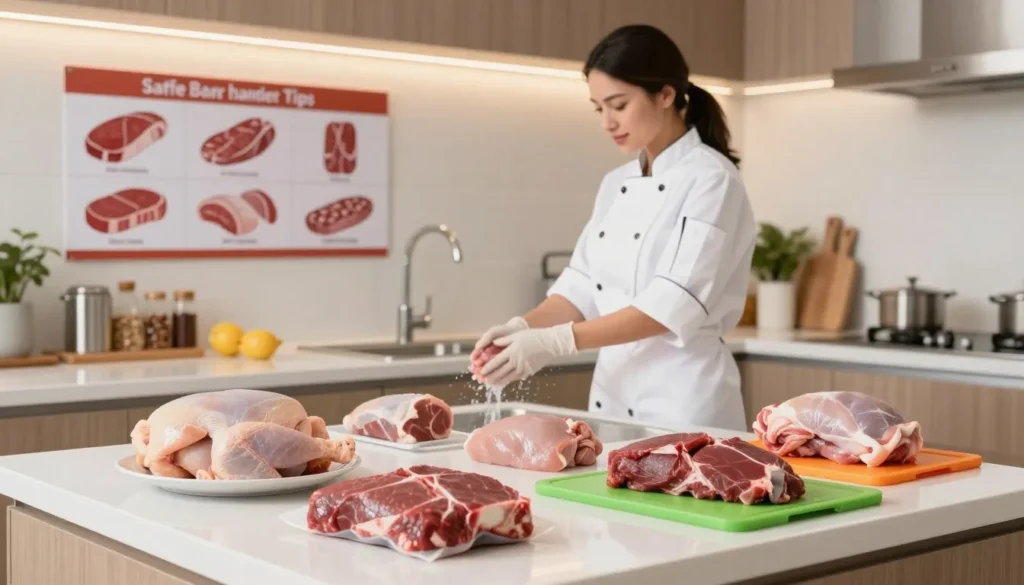
Safe handling of meat is the backbone of kitchen food safety. When meat is mishandled, harmful bacteria from Salmonella and Campylobacter in poultry to E. coli in beef and ground beef, and Listeria in ready-to-eat products — can spread and make people sick. This guide aims to give home cooks and food businesses practical steps and the reasoning behind them so you can handle meat with confidence.
The Core Four principles to practice every time you shop, store, prepare, and cook:
- Clean: Always wash hands and sanitize surfaces and utensils before and after handling meat to remove bacteria.
- Separate: Keep raw meat separate from ready-to-eat foods and use dedicated cutting boards to prevent cross-contamination.
- Cook: Use an accurate thermometer — not color — to confirm meat reaches the correct internal temperature.
- Chill: Keep meat refrigerated or frozen and avoid the 40°F–140°F “danger zone” where bacteria multiply rapidly.
Each of these steps addresses a specific risk: cleaning removes contamination from hands and dishes; separation prevents drips and cross-contact; proper cooking temperatures kill pathogens; and chilling slows bacterial growth. Make sure to keep the printable temperature chart handy for quick reference while you cook.
Clean: Maintaining Proper Kitchen Hygiene Rules
A clean kitchen is one of the simplest and most effective defenses against foodborne illness. Focus on two priorities: thorough hand hygiene and regular cleaning + sanitizing of food-contact surfaces, utensils, and cutting boards to remove bacteria and reduce cross-contamination.
Hand Washing Best Practices
Always wash hands with warm, soapy running water for 20–30 seconds before and after handling raw meat, poultry, or fish. Proper handwashing removes harmful bacteria and cuts the chance of transferring contamination to other foods or surfaces. Follow these quick steps:
- Wet hands with clean running water (warm or cold).
- Apply soap and lather all surfaces palms, backs, between fingers, and under nails — for 20–30 seconds.
- Rinse thoroughly under running water.
- Dry with a disposable paper towel or a clean air dryer; use the towel to turn off the faucet to avoid recontamination.
Cleaning Surfaces, Utensils, and Cutting Boards
Clean first, then sanitize food-contact surfaces after preparing raw meat. For routine cleaning use hot, soapy water; for sanitizing, use either a diluted bleach solution or an EPA-registered sanitizer following label directions.
- Wash cutting boards and utensils in hot, soapy water immediately after use, then sanitize.
- Sanitizer option: mix 1 tablespoon (15 mL) unscented household bleach per gallon (3.8 L) of water; apply, allow at least one minute contact time, then air dry. (Check local guidance or product labels for recommended concentrations and contact times.)
- Keep sanitizer accessible near prep areas so you can treat boards and counters between tasks.
- Avoid using cloth towels to dry surfaces that touched raw meat; they can harbor bacteria. Use disposable paper towels or launder cloths frequently in hot water.
- Wash fresh produce under running water before use — do not use soap or bleach on produce.
The No‑Wash Rule for Poultry
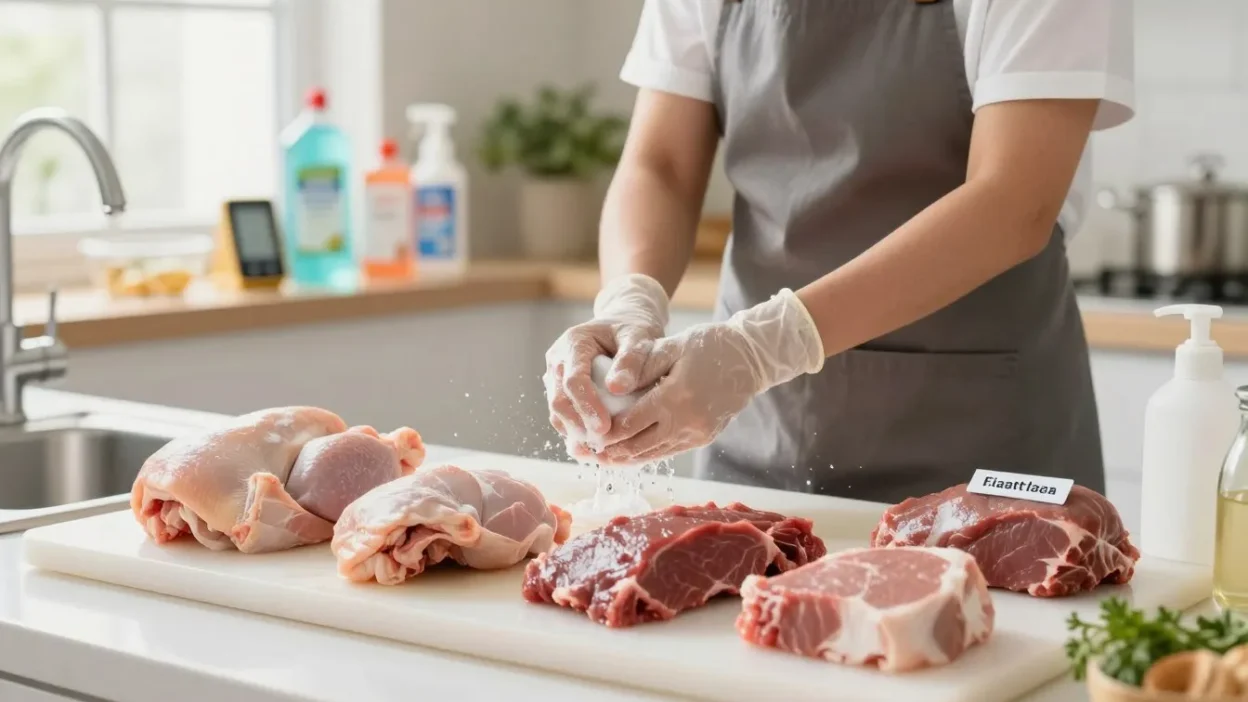
Do not rinse or wash raw poultry. Washing chicken or turkey can aerosolize bacteria such as Campylobacter and Salmonella, spreading them to sinks, countertops, utensils, and hands. Cooking to the correct internal temperature is the safe way to eliminate pathogens.
Quick checklist: always wash hands first, then clean and sanitize any cutting board or surface that touched raw meat. Keeping these habits — wash hands, clean surfaces, and sanitize cutting boards — dramatically reduces bacterial transfer and makes your kitchen safer for every meal.
Separate: How to Prevent Cross Contamination in Your Kitchen
Stopping cross-contamination prevents bacteria from raw meat and poultry from spreading to other foods, surfaces, and utensils. Small habits separate tools, careful storage, and smart shopping make a big difference.
Practical steps to keep cross-contamination under control:
- Use separate, color-coded cutting boards: For example, use red for raw meat and ground beef, yellow for raw poultry, and green for vegetables and ready-to-eat items. The color system is an easy visual cue to avoid accidental cross-contact.
- Store raw meat correctly: Keep raw meats in sealed, leak-proof containers or tightly wrapped in plastic wrap on the bottom shelf of the refrigerator so juices cannot drip onto other foods.
- Never reuse plates or utensils: Place raw meat on a clean plate for cooking and always wash plates, utensils, and cutting boards in hot, soapy water, then sanitize after contact with raw meat.
Note on surface survival: some pathogens can persist on dry plastic cutting boards in a dormant or “viable but non‑culturable” state, so routine sanitizing is important clean with hot, soapy water, then sanitize (see cleaning guidance for a simple bleach solution). Replace cutting boards that have deep grooves where bacteria can hide.
At the store, put raw meat in separate bags and pick up refrigerated items last to reduce time out of refrigeration. Following these separation rules during prep and storage keeps vegetables and other foods safe for everyone at the table.
Cook: Using Safe Cooking Temperatures for Meat
Cooking meat to the correct internal temperature is the most reliable way to kill harmful bacteria and ensure food is safe to eat. Color and texture can be misleading — always use a calibrated food thermometer and probe the thickest part of the cut, avoiding bone, fat, or gristle.
Internal Temperature Master Chart
| Protein Category | Safe Internal Temp | Chef’s Tip / Visual Cue |
| Poultry (chicken, turkey) | 165°F (74°C) | Check the thickest part of the breast and inner thigh; juices should run clear. |
| Ground Meats (beef, pork, lamb) | 160°F (71°C) | Grinding spreads surface bacteria throughout — cook completely; avoid a pink center for safe eat. |
| Pork (whole cuts) | 145°F (63°C) | May remain slightly pink; rest for 3 minutes to allow temperature to even out. |
| Beef/Lamb (steaks, roasts) | 145°F (63°C) | Safe to rest; personal preference ranges from rare to well-done. |
| Seafood (fish, shellfish) | 145°F (63°C) | Flesh should be opaque and flake easily with a fork. |
Using a Food Thermometer Correctly
To get accurate readings and confirm cooking temperatures:
- Insert the probe into the thickest part of the meat, away from bone and large pockets of fat.
- For ground items (burgers, meatloaf) probe the center; for thin pieces insert the probe from the side to reach the middle.
- Wait for the reading to stabilize — digital instant-read thermometers usually register within seconds.
- Calibrate your thermometer per the manufacturer’s instructions or check accuracy in ice water periodically.
- When using a microwave, stir and rotate food halfway through cooking and check temperature in several spots to avoid cold spots.
Carryover Cooking & Resting
Carryover cooking can raise the internal temperature a few degrees after you remove meat from heat; resting also lets juices redistribute. Typical rest times: steaks 5–10 minutes; whole turkey 20–30 minutes. For large roasts, take a temperature after the rest period if you need to verify doneness.
Keep a reliable instant-read thermometer within reach and use the printable temperature chart while you cook to make sure every protein reaches its safe internal temperature.
Chill: Proper Meat Storage and Refrigeration Practices
Storing meat correctly slows bacterial growth and keeps food safe. The goal is simple: keep perishables cold — at or below 40°F (4°C) — and minimize time spent in the 40°F–140°F “danger zone,” where bacteria can multiply rapidly.
Understanding the Danger Zone
The danger zone (40°F–140°F) is where harmful bacteria can double in number in a short time. Refrigerate or freeze meat promptly and avoid leaving perishable foods at room temperature. General rules: refrigerate within 2 hours of purchase or cooking; if the ambient temperature is above 90°F (32°C), refrigerate within 1 hour.
Refrigerator Hierarchy & Best Practices
- Keep your refrigerator at 40°F (4°C) or lower — check weekly with an appliance thermometer to ensure the temperature is steady.
- Bottom-shelf rule: store raw meat and poultry on the lowest shelf in sealed, leak‑proof containers or tightly wrapped in plastic wrap to prevent drips onto ready-to-eat foods.
- Use secondary containment: place packages in a shallow pan or food‑grade container to catch any leaks during transport or storage.
- Speed cooling: divide large roasts or big batches into shallow containers so they cool faster and reach safe refrigerated temperatures sooner.
Safe Refrigerator Time Limits
Follow these conservative timelines to reduce risk:
- Raw ground meat: 1–2 days
- Raw poultry: 1–2 days
- Steaks, chops, roasts (raw): 3–5 days
- Cooked meat / leftovers: 3–4 days
If you won’t eat cooked meats within 3–4 days, freeze them for longer storage (quality may decline over weeks). Label containers with the date (and time if helpful) so you can track how long items have been stored and make sure to keep refrigerated items at safe temperatures during transport.
Safe Meat Thawing Methods to Reduce Bacterial Growth
Thawing meat safely limits bacterial growth and helps keep food safe to eat. The gold standard is planning ahead and thawing in the refrigerator; if you need speed, cold water immersion or the microwave are acceptable when done correctly. Never thaw on the counter — outer layers can enter the danger zone while the center remains frozen.
Refrigerator Thawing Techniques
Refrigerator thawing keeps the meat at a controlled, safe temperature. Tips:
- Place the package on a tray or in a shallow pan to catch any juices.
- Keep the refrigerator at or below 40°F (4°C).
- Allow several hours to a day or more depending on size — small cuts may thaw in a few hours, whole birds or large roasts can take 24+ hours.
Cold Water and Microwave Thawing Guidelines
If you need faster thawing, follow these rules:
- Cold water immersion: seal the meat in a leak‑proof bag and submerge it in cold tap water; change the water every 30 minutes. Small packages may thaw in an hour or less; large roasts take longer — for very large items, consider partial refrigerator thawing first, then finish in cold water.
- Microwave thawing: use the defrost setting and cook immediately after thawing because some areas may begin to cook during defrosting; make sure to check the temperature and finish cooking right away.
Danger: never thaw meat at room temperature or in hot water — leaving meat in the 40°F–140°F danger zone for hours increases risk. These methods protect the quality of raw fish, poultry, beef, and other raw meat while keeping your meals safe.
Shopping Smart: Selecting Quality Meat Cuts for Safety
Choosing the right cuts and inspecting them at the store is the first step in safe meat handling. Buying fresh, properly packaged meat reduces the chance that harmful bacteria come into your kitchen. Use these practical tips when shopping or accepting deliveries.
- Check dates and packaging: Look at sell‑by/use‑by dates and avoid packages that are torn, leaking, swollen, or have off odors — signs of spoilage.
- Choose reputable suppliers: Buy from USDA‑inspected plants, trusted butchers, or suppliers that document safe sourcing and cold‑chain practices — especially if you’re planning raw preparations; opt for higher-quality cuts for dishes served rare or raw.
- Use separate bags and insulated carriers: Place raw meat in separate plastic bags or sealed packages and pick up chilled items last; for long trips use an insulated bag or cooler to keep items cold.
- Buy chilled items last: Get refrigerated and frozen products at the end of your trip and transfer them into a refrigerator or cooler immediately.
- Inspect visually on arrival: For deliveries, refrigerated meat should arrive at ≤ 4°C (≤ 40°F) and frozen at ≤ −18°C (≤ 0°F). Reject items that are sticky, slimy, discolored, have swollen packaging, or show excessive thaw drip.
Quick shopping checklist: check date → inspect packaging → separate raw meat in sealed containers or plastic wrap → refrigerate immediately. For large orders or catering, request documented transport temperatures and food‑grade, leak‑proof containers to maintain the cold chain from supplier to plate.
Guidelines for Handling Raw Meat Safely
Proper handling of raw meat prevents the spread of harmful bacteria and reduces the risk of foodborne illness. A frequent mistake is rinsing or washing raw meat — USDA and CDC guidance advise against this because splashing water can aerosolize pathogens and contaminate sinks, countertops, and utensils. Instead, rely on strict hygiene and correct cooking temperatures to keep food safe.
Avoiding Washing Raw Meat to Reduce Risk
Do not wash raw meat. Rinsing spreads bacteria around the prep area and increases cross-contamination risk. Follow these key steps instead:
- Always wash hands before and after handling raw meat — lather for 20–30 seconds with soap and running water.
- Skip the sink rinse; verify doneness with a thermometer to ensure meat reaches a safe internal temperature.
- Clean and sanitize any surface or utensil that touched raw meat immediately after use; when in doubt, sanitize.
Using Separate Cutting Boards and Containers
Use dedicated cutting boards and containers for raw meat to keep ready-to-eat foods and vegetables safe. Color-coding is an effective system (for example: red = raw meat, yellow = poultry, green = produce).
- Keep a cutting board designated only for raw meat and a separate one for produce.
- Store raw meat in sealed containers or tightly wrapped in plastic wrap on the bottom shelf of the refrigerator to prevent drips.
- After use, wash cutting boards in hot, soapy water, then sanitize.
How to Sanitize Cutting Boards
Sanitize plastic cutting boards using a diluted bleach solution: mix 1 tablespoon (15 mL) unscented household bleach per gallon (3.8 L) of water, apply after washing, allow at least one minute contact time, then air dry. For wooden boards, wash with hot, soapy water and let them dry completely; replace boards with deep grooves (grooves deeper than about 1/8 inch or that trap food particles) because they can harbor bacteria.
Quick frequency guide: sanitize cutting boards after any raw meat use; launder dish towels and sponges daily or replace them frequently. Following these steps — always wash hands, avoid washing raw meat, use dedicated cutting boards, and sanitize when unsure — will significantly reduce the chance that bacteria spread in your kitchen and help keep food safe.
Special Considerations for Meat Handling During Cultural Celebrations Like Eid
Large gatherings and cultural celebrations often involve cooking and sharing large quantities of meat, so strict food-safety practices are essential to protect guests and preserve food quality. Plan ahead and assign simple roles so handling stays consistent from procurement through service.
Key practices for safe celebrations:
- Hand washing: Always wash hands with soap and water for 20–30 seconds before and after handling meat.
- Clean utensils: Use clean knives, cutting boards, and serving utensils; sanitize between uses to prevent cross-contamination.
- Separate raw and cooked: Keep raw meats apart from cooked dishes and ready-to-eat foods at all times.
- Quality cuts for raw preparations: If you’re planning raw dishes (e.g., tartare), choose high-quality whole cuts from trusted suppliers and hand-dice rather than grind so you control texture and reduce surface-area exposure; request documented safe sourcing when possible.
Bulk Handling & Catering Checklist
For large orders or events, follow this short workflow to maintain safety:
- Choose suppliers that provide inspected, traceable meats and documented cold‑chain records.
- Accept deliveries only if refrigerated items arrive at ≤ 4°C (≤ 40°F) and frozen items at ≤ −18°C (≤ 0°F); reject packages that are leaking, slimy, discolored, or bulging.
- Use food‑grade, leak‑proof containers and insulated carriers; load chilled items last and unload them first.
- Keep cooked foods hot (≥ 140°F) or chilled (≤ 40°F) during service — use warming trays, insulated carriers, coolers, or ice baths as needed.
- Train helpers: assign roles (carving, serving, cleanup) and require glove changes, handwashing, and sanitizing between tasks. Label containers with dates so leftovers are managed safely for the following weeks.
Following these steps for different types of meats — from procurement to service — helps prevent spoilage and harmful bacteria growth, so you can celebrate safely and confidently. Consider downloading the one-page catering checklist to share with volunteers and vendors.
Preventing Foodborne Illness Through Consistent Food Safety Practices
Making simple food safety habits routine is the best way to reduce the risk of foodborne illness in any kitchen. The Core Four — Clean, Separate, Cook, and Chill — work together to keep harmful bacteria from contaminating meals prepared with meat, poultry, fish, and other perishable types of food.
Even a small lapse — leaving food in the danger zone, using the same cutting board for raw meat and vegetables, or failing to check internal temperature — can allow bacteria to multiply. Use the short checklist below every time you shop, prepare, cook, and store food to help everyone eat safely.
4 Steps to Food Safety — Quick Checklist
- Clean: Always wash hands for 20–30 seconds with soap and running water before and after handling raw meat. Clean and sanitize surfaces and utensils that contact raw foods.
- Separate: Use separate cutting boards and plates for raw meats and produce; store raw meat in sealed containers on the bottom shelf of the refrigerator.
- Cook: Use a thermometer to verify safe internal temperatures (see the temperature chart). Do not rely on color alone — temperature is the reliable indicator that meat is safe to eat.
- Chill: Refrigerate perishables within 2 hours (1 hour if ambient temperature is above 90°F/32°C). Keep your refrigerator at or below 40°F (4°C).
Leftovers & Storage Reminder
Refrigerate cooked meat and leftovers promptly. Consume refrigerated leftovers within 3–4 days; otherwise, freeze for longer storage (quality may decline over weeks). Label containers with the date and time cooked so you can track how long items have been stored and make safe choices later.
Public-health studies show these straightforward food safety practices significantly lower risk by limiting bacterial growth and cross-contamination. Download the printable temperature chart and the one-page checklist to pin in your kitchen or share with staff when you’re planning meals or larger events.
Conclusion
Safe handling of meat is the foundation of a healthy kitchen. Following the Core Four — Clean, Separate, Cook, and Chill — prevents harmful bacteria from turning a meal into a health risk and protects you, your family, and guests at everyday meals or special events.
Make these steps part of your routine:
- Clean — always wash hands and sanitize surfaces after handling raw meat.
- Separate — keep raw meat and ready-to-eat foods apart and use dedicated cutting boards.
- Cook — use a thermometer to confirm safe internal temperatures rather than relying on color.
- Chill — refrigerate perishable foods within 2 hours (1 hour if above 90°F/32°C) and consume leftovers within 3–4 days or freeze for longer storage.
Put these habits into practice to make food safety simple and consistent. Make sure to download and print the temperature chart and one-page checklist for quick reference in the kitchen or to share when you’re planning large meals — a small step that helps everyone eat more safely and enjoy food with greater confidence and peace of mind.
FAQ
What are the common symptoms of foodborne illness?
Common symptoms include stomach cramps, diarrhea, nausea, vomiting, fever, chills, headache, and muscle aches. Onset can be rapid for some toxins (within hours) or delayed for infections like Listeria (days to weeks). Seek medical care if symptoms are severe, persistent, or if signs of dehydration develop.
Who is most at risk for severe foodborne illness?
People at higher risk include pregnant women, young children, older adults, and individuals with weakened immune systems. These groups should follow strict food-safety practices and avoid risky raw preparations unless sourcing and handling are documented and controlled.
What are the Core Four principles of food safety?
Clean, Separate, Cook, Chill: wash hands and surfaces; keep raw meat separate from ready-to-eat foods; cook to recommended internal temperatures; and chill perishable foods promptly to slow harmful bacteria growth.
How should I properly wash my hands when handling food?
Wash hands with warm, soapy running water for 20–30 seconds before and after handling raw meat, poultry, fish, or produce. Dry with a disposable paper towel or clean cloth and, if possible, use the towel to turn off the faucet to avoid recontamination.
What is cross-contamination and how can I prevent it?
Cross-contamination happens when bacteria from raw meats spread to other foods, surfaces, or utensils. Prevent it by using separate cutting boards and plates for raw meat and produce, storing raw meat in sealed containers on the bottom shelf of the refrigerator, and sanitizing surfaces and dishes after contact with raw items.
What are the safe cooking temperatures for different types of meat?
Use a food thermometer to confirm safe internal temperatures. Quick reference: poultry 165°F (74°C); ground meats (beef, pork, lamb) 160°F (71°C); whole cuts (steaks, roasts, pork) 145°F (63°C) with a 3‑minute rest; seafood 145°F (63°C). Always probe the thickest part away from bone.
How should I store meat in the refrigerator?
Keep your refrigerator at or below 40°F (4°C). Store raw meat in sealed containers or wrapped in plastic wrap on the bottom shelf to prevent drips. Refrigerate perishables within 2 hours (1 hour if ambient temperature is above 90°F/32°C). Cooked leftovers should be eaten within 3–4 days.
What are the best methods for thawing meat safely?
Refrigerator thawing is safest (≤ 40°F/4°C). For faster thawing, use cold water immersion in a sealed bag (change the water every 30 minutes) or microwave defrosting — but cook immediately after microwave thawing. Never thaw meat on the counter to avoid the danger zone.
What should I look for when shopping for meat?
Check sell‑by/use‑by dates and inspect packaging. Avoid torn, leaking, or swollen packages and products with off odors. Keep raw meat separate in bags or wrapped in plastic wrap, buy refrigerated items last, and place them in a refrigerator or cooler immediately.
Is it safe to wash raw meat before cooking?
No — washing raw meat is not recommended because splashing can spread bacteria around the sink and nearby surfaces. Always wash hands after handling raw meat and rely on proper cooking to kill harmful bacteria.
Is pink meat always undercooked?
No — color is unreliable. Some whole cuts (like pork or steaks) can remain slightly pink at safe temperatures (145°F with a 3‑minute rest). Use a thermometer to be sure.
Where exactly should I probe the meat with a thermometer?
Insert the probe into the thickest part of the meat, avoiding bone, fat, or gristle. For thin items, insert the probe from the side so the tip reaches the center. For poultry, check both the thickest part of the breast and the inner thigh.
How can I ensure food safety during large events or cultural celebrations?
Maintain the cold chain from supplier to service: accept deliveries only at correct temperatures, use food‑grade, leak‑proof containers, keep cooked foods hot (≥ 140°F) or cold (≤ 40°F), train helpers on handwashing and cross-contamination prevention, and require documented temperatures when you’re planning big orders.
Where can I download a printable temperature chart and where to buy a reliable thermometer?
Download the printable temperature chart and one‑page checklist from the link in this article to keep by your stove or share with staff. For thermometers, choose a digital instant‑read model from reputable retailers; many grocery and kitchen-supply stores sell calibrated thermometers. For best accuracy, follow the manufacturer’s calibration instructions or check accuracy in an ice‑water test.