


Did you know that nearly 80% of heart disease and type 2 diabetes cases could be prevented through healthier food choices? That statistic highlights why understanding Ways to Promote and Maintain Health and Wellbeing Nutrition is so important for protecting your long-term health.
To me, nutrition is about far more than following a restrictive diet or chasing the latest food trend. It’s about building sustainable habits that nourish both the body and the mind. With so much conflicting advice available today, it’s easy to feel overwhelmed. That’s why this guide focuses on practical, science-backed strategies that are simple to understand and easy to apply in everyday life.
Lasting wellness doesn’t happen overnight—it grows from small, consistent choices made every day. You don’t need to be perfect to improve your health. By understanding how everyday food choices affect your energy, mood, and overall wellbeing, you can make informed decisions with confidence. Let’s explore practical habits that fit into busy lifestyles and help you build a healthier future, one meal at a time.
1. Understanding the Foundation: Why Nutrition is Essential for Maintaining General Health and Wellbeing

Nutrition is the foundation of our health and wellbeing. It affects our physical health, mental clarity, and emotional stability. Knowing how nutrition impacts our bodies helps us make better choices for our health.
The Science Behind Nutritional Health and Its Impact on Your Body
Our bodies need a mix of macronutrients and micronutrients to work well. Macronutrients like proteins, carbohydrates, and fats give us energy for daily tasks. Each one has a special role:
- Proteins help fix tissues and build muscles.
- Carbohydrates are our main energy source.
- Fats support cell structure and hormone production.
Micronutrients, like vitamins and minerals, are key for many body functions. They help with metabolism and immune function. Eating whole foods can fight inflammation and boost our immune system. But, eating too much processed food can lead to chronic diseases.
How macronutrients and micronutrients work together to support bodily functions
Nutrients work together to keep us healthy. For example, vitamin D helps our bodies use calcium, which is important for bones. Eating a balanced diet ensures our bodies get what they need to thrive.
Understanding the relationship between nutrition and disease prevention
The World Health Organization (WHO) says a healthy diet can lower the risk of diseases like diabetes, heart disease, and stroke. By focusing on nutrition, we can prevent these conditions.
Why I Prioritize Nutrition in My Daily Routine
Reflecting on my journey, I see how vital nutrition is for health and wellbeing. It’s not just about looks; it’s about living well. This realization changed how I view food and health.
Personal reflections on making nutrition a priority for long-term wellness
When I started prioritizing nutrition, I felt more energetic and happier. Eating whole foods is rewarding, not a burden. It’s about giving my body the fuel it needs for the things I love.
Setting realistic expectations for nutritional improvement
Changing to a healthier diet doesn’t have to be drastic. I focus on small, lasting changes. Setting achievable goals helps me celebrate progress, making the journey fun and manageable.
2. Strategies to Promote and Maintain Health and Wellbeing Nutrition Through Balanced Eating
In my quest for better health, I’ve found great ways to keep wellbeing through balanced eating. A balanced plate is more than a concept; it’s my daily practice. It ensures I get the nutrients I need.
Building a Balanced Plate: My Step-by-Step Approach
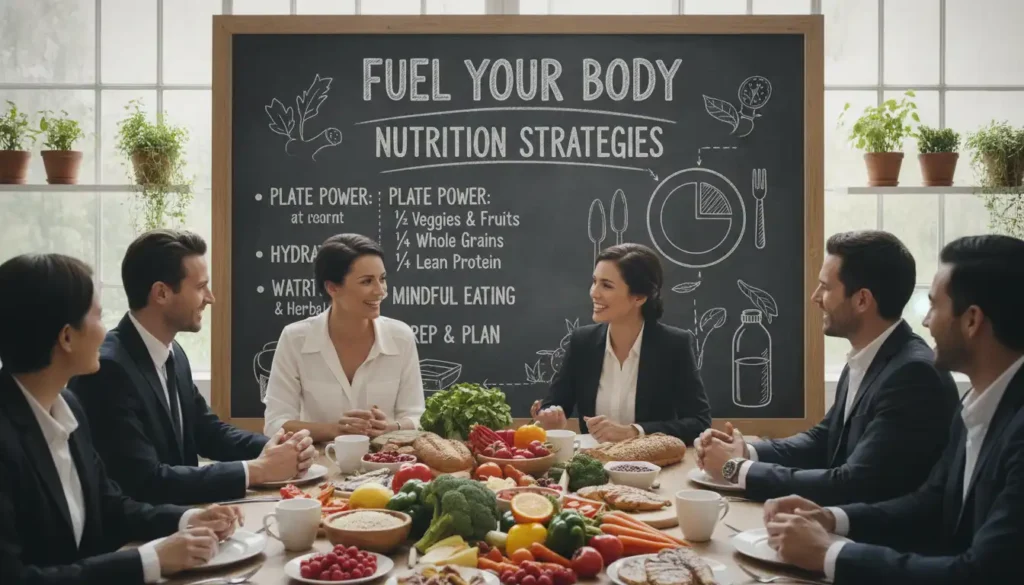
To make a balanced plate, I follow a simple plan. I start with half my plate for colorful veggies and fruits, packed with vitamins and minerals. Next, I add a quarter for lean proteins like grilled chicken or fish. The last quarter is for whole grains, which give me energy.
Incorporating diverse food groups effectively for complete nutrition
This method makes meal prep easy and ensures I get all the nutrients. The NHS suggests meals should be based on starchy carbs and include lots of fruits and veggies. I also add oily fish like salmon for omega-3s.
Portion control techniques I use daily to maintain balance
Controlling portions is key to a balanced diet. I use simple methods without needing measuring tools. For example, I judge protein by my palm, grains by my fist, and healthy fats by my thumb. This makes adjusting portions easy based on my activity level.
Understanding Portion Sizes and Serving Recommendations
Knowing portion sizes is essential for good nutrition. Visual guides help me estimate portions without measuring. I use my plate as a guide to figure out food group amounts.
Visual guides for portion estimation without measuring tools
Using my hand as a guide helps me keep portions right. For example, a protein serving is about the size of my palm, and grains fill my fist. This makes eating easy and enjoyable.
Adjusting portions based on activity level and individual needs
On active days, like after a run, I eat a bit more to fuel my body. On less active days, I eat less to avoid overeating. Being flexible is important for a balanced diet.
3. The Role of Diet and Nutrition on Mental Health and Wellbeing
What we eat greatly affects our mental health and emotional wellbeing. Our food choices can change our mood and how well we think. It’s important to understand this link for better mental and physical health.
How Food Choices Affect Your Mood and Cognitive Function
The connection between our gut and brain is fascinating. Our digestive system talks to our brain. Eating foods that support a healthy gut can make us feel better and less anxious. Taking care of our gut helps our mind too.
The gut-brain connection explained in practical terms
Eating foods with probiotics, like yogurt and sauerkraut, helps our gut. These foods support good bacteria in our gut. This bacteria makes neurotransmitters, like serotonin, which helps us feel happy. Eating well can make our minds happier and healthier.
Key nutrients for mental clarity and emotional balance
Some nutrients are key for a clear mind and emotional balance:
- Magnesium: Helps us relax and lowers anxiety.
- B Vitamins: Important for energy and thinking clearly.
- Omega-3 Fatty Acids: Good for our brain and mood.
Foods I Include to Support My Mental Health
I focus on foods that help my mental health. I avoid pork and alcohol, choosing nutrient-rich foods instead. Here are some foods I love:
Omega-3 rich alternatives for brain health and mood stability
- Salmon: Full of omega-3s, great for our brain.
- Sardines: Another omega-3 source.
- Walnuts: A plant-based omega-3 option.
- Flaxseeds: Add them to smoothies or oatmeal for a boost.
Complex carbohydrates for stable energy and mood regulation
I eat complex carbs for steady energy and mood. Here are some of my favorites:
- Sweet Potatoes: A good energy source.
- Oats: Great for breakfast, keeps energy up.
- Quinoa: A complete protein that keeps me full and happy.
4. Explaining the Importance of Good Nutrition and Hydration in Maintaining Health and Wellbeing
Nutrition and hydration are key to our health and wellbeing. Good nutrition gives our bodies energy. Proper hydration makes sure our body works right. I’ve found that treating hydration as a key nutrient changes my day-to-day life.
Hydration Fundamentals: More Than Just Drinking Water
Many think hydration means only drinking water. But it’s more than that. The NHS says I should drink 6 to 8 glasses of fluid a day. This includes water, milk, and other non-alcoholic drinks.
Signs of dehydration I watch for in my body daily
It’s important to know the signs of dehydration. I look out for:
- Afternoon fatigue
- Mild headaches
- Difficulty concentrating
These signs are often mistaken for hunger. But they mean my body needs more water.
Hydration timing strategies throughout the day
To stay hydrated, I’ve found good timing helps. I drink a full glass of water in the morning. I also drink another glass 30 minutes before meals. This helps with digestion too.
How I Maintain Proper Hydration Alongside Nutritious Eating
Hydration is as important as eating right. I eat foods that are full of water. My favorites include:
- Cucumbers
- Watermelon
- Zucchini
- Leafy greens
These foods are not only refreshing but also full of nutrients.
Water-rich foods that support hydration naturally
I also enjoy fruit salads and smoothies. They’re great for staying hydrated. They keep me energized and help me meet my nutrition goals.
Beverage alternatives that complement nutrition goals
For drinks, I choose:
- Herbal teas
- Infused water with berries and mint
- Unsweetened coconut water
These drinks are tasty and hydrate without sugar. They help me keep a balanced diet.
5. List the Importance of Good Nutrition and Hydration in Maintaining Health and Wellbeing
Nutrition and hydration are key to my health journey. They greatly impact my wellbeing. I’ll share the benefits and how I track my progress.
Key Benefits I Experience From Proper Nutrition and Hydration
Enhanced energy levels throughout the day
- Fueling my body right boosts my energy. No more afternoon crashes! I stay focused and productive all day.
Improved immune function and faster recovery
- Good nutrition strengthens my immune system. I get sick less and recover faster. It’s a big help during cold and flu seasons.
Better digestive health and regularity
- A balanced diet improves my digestion. I feel less bloated and have regular bowel movements. It makes me feel more comfortable.
Tracking Your Nutritional Progress: Methods That Work
Tracking my nutrition is key to my wellness. Here are some methods I find helpful:
Journaling techniques for building nutritional awareness
- I keep a food journal. I note how meals affect my energy, mood, and fullness. It’s more than just counting calories.
Simple metrics to monitor improvements over time
- I also track things like sleep quality and morning heart rate. Regular bowel movements show my digestive health is good.
6. Explaining How the Concepts of Nutritional Health Contribute to Health and Wellbeing
Understanding nutritional health is more than just a diet; it’s a foundation for well-being. Integrating nutritional science into my everyday decisions has transformed how I approach food. By making informed choices, I enhance my overall health and vitality.
Integrating Nutritional Science Into Everyday Decisions
One of the first steps I take is reading labels carefully. This practice allows me to check for high sugar content (more than 22.5g per 100g), high salt (over 1.5g per 100g), and saturated fat levels. The World Health Organization advises reducing harmful fats, making this knowledge essential.
Understanding nutritional density is also key. For instance, a handful of almonds offers more vitamins, minerals, and healthy fats than a rice cake, even if their calorie counts are similar. This insight helps me prioritize foods that truly nourish my body.
Reading Labels and Making Informed Food Choices
When I shop, I evaluate food quality based on specific criteria. I look for whole, minimally processed foods and choose items with short, recognizable ingredient lists. Opting for unsaturated fats from sources like avocados and olive oil is another priority.
Understanding Nutritional Density in Everyday Foods
While convenience is important, I strive to balance it with nutritional value. For example, I often choose a rotisserie chicken and a bagged salad kit over a frozen pizza. This way, I can enjoy a nutritious meal without sacrificing time.
My Framework for Evaluating Food Quality
By following my framework, I can enhance my well-being through proper nutrition without aiming for perfection. I believe that every small decision counts towards better health, making it easier to maintain a balanced diet in our busy lives.
Criteria I Use for Food Selection and Purchasing Decisions
- Prioritize whole, minimally processed foods
- Choose items with short ingredient lists
- Opt for unsaturated fats over saturated fats
Balancing Convenience with Nutritional Value
- Consider quick options like rotisserie chicken
- Utilize salad kits for easy meal prep
- Keep healthy snacks on hand for busy days
7. Practical Meal Planning: Strategies for Optimal Nutrition in Your Busy Life
Meal planning can change your life if you’re always on the go. It helps you eat healthy, saves time, and reduces stress. Here are some strategies that work well for me.
Weekly Meal Prep Techniques I Recommend
Weekly meal prep is key to a balanced diet. It lets you prepare meals ahead of time. This way, you always have healthy options ready.
Batch cooking methods that save time during weekdays
Batch cooking is a game-changer. On Sundays, I roast veggies and grill chicken. These ingredients can be used in many meals, like stir-fries or salads.
Storage tips for maintaining food quality and safety
Storing food right is essential. I use glass containers to avoid plastic waste. Cooling food completely before refrigeration keeps it fresh and safe.
Creating a Flexible Meal Rotation System
A flexible meal plan keeps things interesting and ensures you get all the nutrients. I use a simple template for my meals each week.
Sample weekly meal templates for diverse nutrition
- Monday: Salmon and quinoa bowl
- Tuesday: Black bean and sweet potato tacos (using corn tortillas)
- Wednesday: Large chicken and mixed green salad
Adapting plans based on seasonal and available ingredients
Changing my meal plan with the seasons keeps things fresh. For example, I might use asparagus in spring and butternut squash in fall. This supports local farmers and ensures I eat the best produce.
8. Healthy Lifestyle Choices: Small Changes With Big Impact
Making healthy lifestyle choices might seem hard, but small steps can make a big difference. Focus on daily habits and how you interact with others. This way, you can support your health goals better.
Daily Habits That Support Nutritional Goals
Creating daily routines is key for good nutrition. Here are two habits I stick to:
Morning routines that set you up for nutritional success
- Start your day with a glass of water to hydrate after a night’s sleep.
- Enjoy a protein-rich breakfast, such as Greek yogurt topped with berries and seeds, to kickstart your metabolism.
- Incorporate a brief period of physical activity, like stretching or a short walk, to energize your morning.
Evening practices for better digestion and sleep
- Finish your last meal at least two hours before bedtime to allow for proper digestion.
- Engage in a gentle walk post-dinner to help with digestion and relaxation.
- Limit screen time before bed to improve sleep quality.
Social Eating Strategies for Maintaining Balance
Social events can test your nutrition goals, but you can handle them well with the right approach:
Navigating restaurants and gatherings while honoring nutrition goals
- Preview the menu online to identify healthy options before arriving.
- Look for grilled or baked dishes instead of fried ones.
- Request dressings and sauces on the side to control portions.
Communicating your health goals with family and friends
Talking about your health goals with loved ones is important. Here’s how to do it positively:
- Frame your choices as personal decisions for well-being, not restrictions.
- Invite friends to join you in healthy activities, like cooking nutritious meals together.
- Encourage open discussions about health goals to foster support and understanding.
9. Holistic Approaches to Health: Combining Nutrition With Other Wellness Practices
A holistic approach to health combines nutrition with various wellness practices. It’s about understanding how nutrition works with physical activity, sleep, and stress management. By seeing these connections, I can improve my overall well-being.
Integrating Physical Activity With Nutritional Intake
Physical activity is key for staying healthy. The World Health Organization suggests 150-300 minutes of moderate activity weekly. I find that matching my meals with my workouts really helps.
Pre and post-workout nutrition timing for optimal results
I like to eat simple snacks before working out, like a banana or whole-grain toast with almond butter. It gives me the energy I need. After working out, I eat a meal with a 3:1 carb-to-protein ratio. A berry and spinach smoothie with protein powder is great for recovery.
Matching food intake to activity levels and goals
On days for long hikes, I eat more. On rest days, I eat less. This keeps me balanced and full of energy all week.
Sleep and Stress Management as Nutritional Allies
Sleep and stress management are vital but often ignored in nutrition talks. They’re key to my health. A bad night’s sleep can mess with my hormones, making me hungrier and less full.
How poor sleep affects nutritional choices and metabolism
Without enough sleep, I start craving unhealthy foods. This can mess up my nutrition goals.
Stress-reducing foods and mindful eating practices
To fight stress, I eat certain foods. Chamomile tea, dark leafy greens, and dark chocolate are my favorites. I also practice mindful eating by taking deep breaths before meals. This improves my digestion and satisfaction.
10. Maintaining a Balanced Diet Long-Term: Tips for Sustainable Success
Keeping a balanced diet for the long term needs commitment and a plan. It’s tough, but with the right steps, it’s easier. Here are some tips I’ve found helpful for staying healthy and well.
Building Resilience Against Common Challenges
One big challenge is dealing with cravings and setbacks. Here’s how I handle these issues:
Managing cravings without guilt or restriction
When cravings strike, I tell myself it’s okay to enjoy a treat. I pick a high-quality snack, like dark chocolate, and enjoy it slowly. This way, I avoid the cycle of bingeing and restricting.
Handling setbacks constructively and learning from them
Setbacks are part of any health journey. I see a weekend of indulgence as a chance to learn. By reflecting on these moments, I can plan better for the future.
Creating Systems That Support Lasting Change
To make healthy choices easier, I’ve set up systems:
Environmental design for making healthy choices easier
- Keep a fruit bowl on the counter for easy access.
- Store less-healthy snacks out of sight to reduce temptation.
- Pre-chop vegetables so they are the easiest option to grab.
Accountability structures and support systems
- Share a note with a friend to log weekly nutrition goals.
- Schedule regular check-ups with a healthcare provider to monitor health metrics.
- Join a community group focused on healthy eating for additional support.
By creating a supportive environment, I make healthy habits easier. With these strategies, I’m confident in my ability to succeed on my health journey.
Conclusion
Reflecting on nutrition and wellbeing, I see a path to a healthier, happier life. Understanding nutrition’s science is just the start. I’ve shared tips on meal planning, staying hydrated, and mental health.
Nutrition is a lifelong journey, not a quick fix. It’s about making small, consistent changes. Every step, like adjusting portions or trying new recipes, matters. It’s about enjoying food that’s good for you.
Begin with a small change today. Maybe add more veggies to your meals or drink more water. Each choice helps your wellbeing. Now, you have tools to guide your nutrition journey.
It’s not about being perfect. It’s about living a healthy lifestyle that improves your life. Approach this journey with kindness and curiosity. Your health is worth the effort.
FAQ
What are some practical ways to promote and maintain health and wellbeing nutrition?
To start, build a balanced plate with half veggies and fruits. Add a quarter of lean protein and whole grains. Drinking enough water and knowing your portion sizes also helps. Adding nutrient-dense foods to your diet boosts wellbeing.
How does nutrition impact mental health?
Nutrition affects your mood and brain function. Eating foods rich in fiber and fermented foods helps your gut. This can make you feel better and less anxious. Magnesium and B vitamins are also key for a clear mind and emotional balance.
What are the signs of dehydration I should look out for?
Look out for afternoon tiredness, mild headaches, and trouble focusing. Catching these signs early helps keep you hydrated.
How can I track my nutritional progress effectively?
Instead of counting calories, write down how meals affect you. Note your energy, mood, and fullness. Use sleep quality and heart rate to measure your wellness.
What should I consider when evaluating food quality at the grocery store?
Choose whole, unprocessed foods with simple ingredient lists. Opt for foods high in good fats, fiber, and protein. Avoid foods with lots of added sugars and saturated fats. Pick foods that give you more nutrients per calorie.
How can I maintain good nutrition while eating out or socializing?
Look at menus before you go and choose grilled or baked options. Talk about your health goals in a positive way. Stick to drinks like sparkling water with lime instead of alcohol.
What are some strategies for meal prep that can fit into a busy lifestyle?
Cook in bulk on weekends and use glass containers for storage. Plan meals that use seasonal produce. This keeps your diet fresh and varied.
How do sleep and stress management contribute to nutritional health?
Bad sleep can make you crave unhealthy foods. Eating foods rich in magnesium and practicing mindful eating can help manage stress. This improves your overall health.
What is the importance of hydration in my daily nutrition?
Drinking enough water is key for energy, brain function, and health. Include water-rich foods and make drinking water a habit. This boosts your daily hydration.
How can I build resilience against cravings and setbacks in my nutrition journey?
View indulgence as part of your journey, not a setback. See every mistake as a chance to learn. Keep healthy snacks visible and easy to grab to support your choices.